Font size
Vibe Coding: When to Use It, When to Avoid It
Vibe Coding: Speed with Guardrails
What is vibe coding?
Working with an LLM (Claude, Gemini, ChatGPT...) as a pair, you provide intent and tone more than a step-by-step spec. The goal is rapid drafts: landing pages, flows, small utilities.
Why it’s trending
Recent LLMs generate higher-quality UI/UX copy and code.
Teams need faster prototyping and exploratory UX work.
Solo builders want to test markets before investing in full builds.
Pros
Fast prototyping: ship a draft landing page or feature flow in hours.
Idea breadth: varied prompts yield multiple design/copy options.
Onboarding aid: new devs grasp context through guided dialog.
Copy polish: microcopy, banners, onboarding text improve quickly.
Cons and risks
Low reproducibility: hard to recreate the same output later.
Technical debt: code may ignore project conventions or tests.
Hallucinations/security: missing deps, weak validation, unsafe code.
Scope drift: model might add features you never asked for.
When it matters (and for whom)
Founders/product designers: first-pass UI/UX or messaging.
Indie hackers: quick MVPs to validate demand.
Marketing/content teams: landing pages and campaigns.
Not for: regulated/critical/security-sensitive systems.
Guardrails to use
1
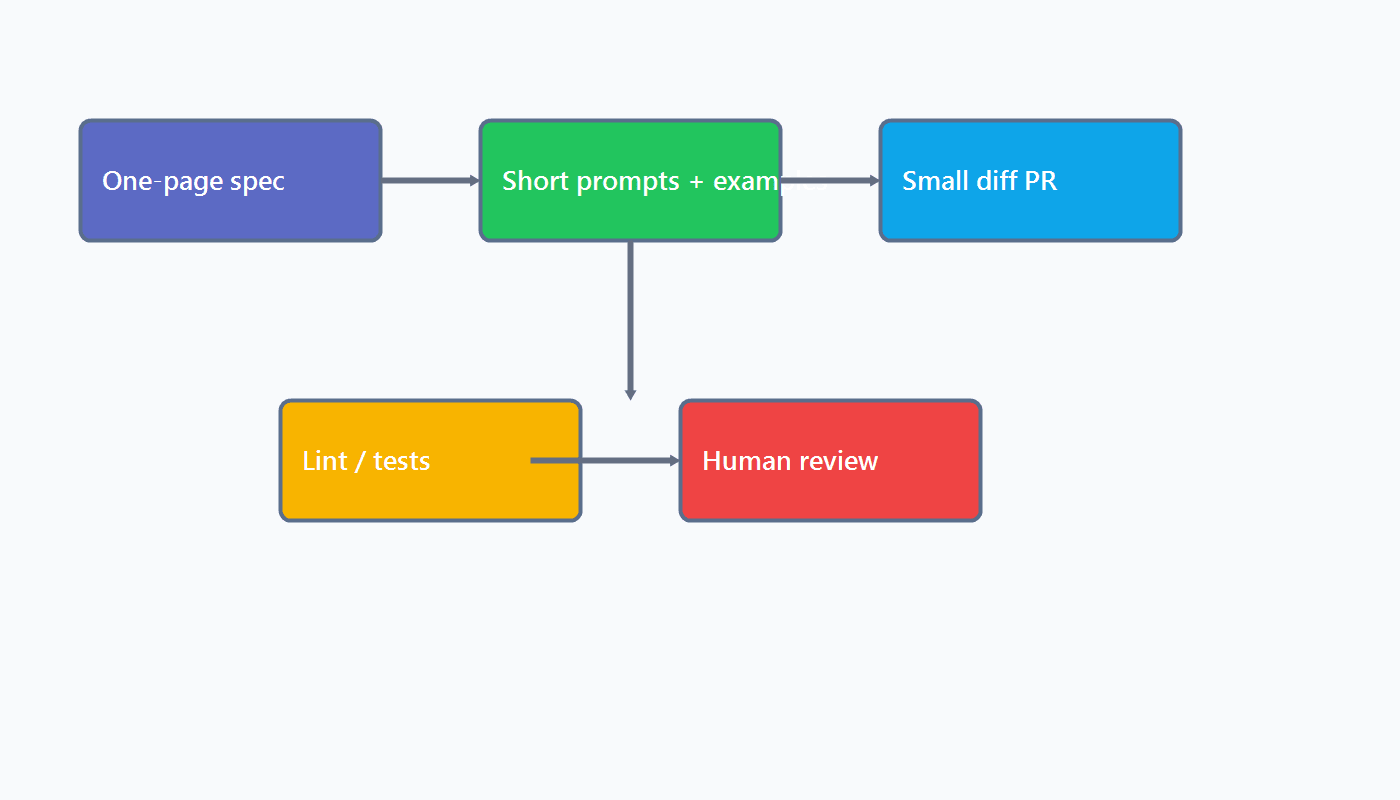
Start with a one-page spec: goal, non-goals, constraints.
2
Provide real examples (schemas, screenshots, sample JSON) over vague prompts.
3
Ask for short steps and confirm in iterations, not huge dumps.
4
Enforce project standards: lint/format/tests every iteration.
5
Keep diffs small and reviewable (one area at a time).
6
Manually review security and dependencies before merge.
Who can be a vibe coder?
Anyone who understands the product and basic engineering hygiene.
Comfortable with Git and quick testing to catch model mistakes.
Beginners should keep a human reviewer in the loop.
Does it really matter?
Yes for speed and ideation; no as a replacement for disciplined engineering. Blend fast prompts with strict safeguards to avoid brittle, unmaintainable code.
> Try adapting the simple mycalculator app as a low-risk playground for vibe coding.